


In many companies, marketing and sales are among the pioneers in the use of AI solutions. The communication- and data-intensive work in these areas opens up numerous use cases in which the added value of AI quickly becomes visible and immediately usable.
At the same time, many companies are facing a new challenge: instead of scalable AI processes, isolated individual solutions and specialized tool landscapes are often created that make integration, collaboration and sustainable scaling more difficult.
Although many teams are experimenting intensively with generative AI, there is often still a large gap between the first pilot projects and real productivity in day-to-day business. A lack of integration into existing processes, unclear responsibilities, data protection requirements and a lack of governance often prevent AI from reaching its full potential.
In this blog post, we show you how AI can be used in marketing and sales to create sustainable value. You will receive a compact overview of:
- Relevant AI use cases in marketing & sales
- Centralized AI workstations instead of fragmented tool landscapes
- Technological and organizational requirements for scalable AI processes
- Automated workflows and AI agents in everyday business life
- Governance, data protection and secure AI use in a business context
The most important AI use cases in marketing & sales
Content creation & campaign production
AI is changing the way marketing teams create content and develop campaigns. Content can be produced faster, personalized and scaled across channels. AI models support research, structuring, variant creation and target group-specific communication in particular.
However, original ideas, creative concepts and a clear brand voice remain decisive differentiating factors. AI does not replace creative work, but acts as a powerful assistant that relieves teams, accelerates processes and creates more space for strategic and creative tasks.
Access to different AI models opens up additional scope for optimizing results in a targeted manner depending on the application, style and task.
Personalization & customer experience
AI enables companies to address customers more individually along the entire customer journey. Content and offers can be dynamically adapted based on behavior, interests and interactions.
A relevant and authentic approach remains the key success factor. AI supports teams in efficiently scaling personalized experiences, identifying needs more quickly and creating consistent customer experiences across channels.
Offer & sales automation
AI can make administrative and preparatory sales tasks significantly more efficient. Offers can be prepared automatically based on existing customer data, follow-up emails can be personalized and CRM entries from meetings or sales calls can be documented directly.
At the same time, sales opportunities can be identified more quickly, leads can be prioritized more specifically and sales activities can be implemented more efficiently. This noticeably reduces manual effort in day-to-day sales and gives sales teams more time for qualified customer meetings.
Market Intelligence
AI-supported market monitoring helps marketing and sales teams to analyze market movements, competitors and target groups faster and more data-based. In contrast to traditional alert systems, modern AI systems recognize correlations, automatically prioritize relevant developments and translate information directly into concrete insights.
Company news, product launches, job advertisements and competitor activities can be continuously monitored, analyzed and prepared for specific teams. AI agents automate the research effort and create a more sound basis for decision-making for campaign planning, sales and business development.
Central AI workstation for marketing & sales teams
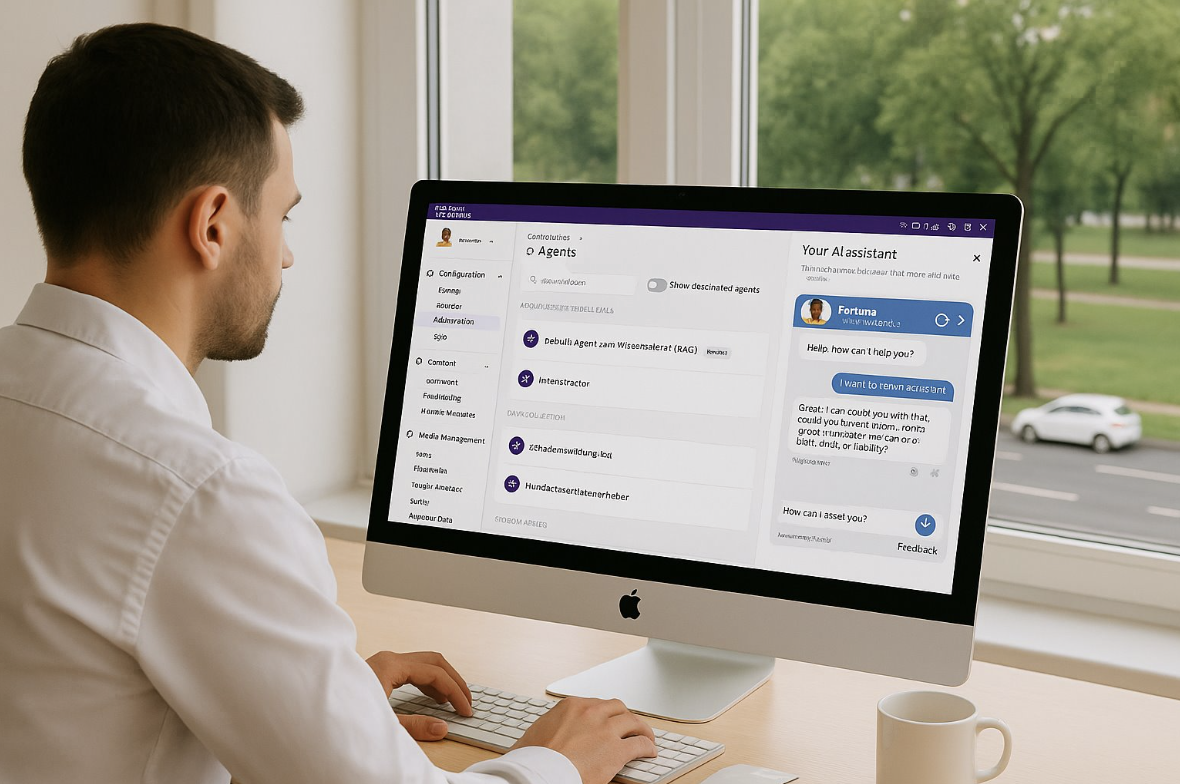 |
But how can these and other company-specific use cases be scaled within individual teams and across departmental boundaries? A crucial step is the establishment of a central AI platform that provides employees with structured access to relevant AI applications. Depending on whether tasks are mapped via simple prompts or deeply integrated AI workflows, suitable admin and governance structures are required to efficiently control usage, access rights and quality standards. A central AI workstation creates a shared working environment for marketing, sales and other areas of the company. |
Approved prompts, AI assistants, automations and agent-based workflows can be used in a standardized way and further developed across the organization. At the same time, data protection, compliance and brand guidelines can be secured centrally.
As a result, AI is evolving from an isolated productivity solution for individual employees to a scalable infrastructure for collaborative value creation. Companies that establish appropriate structures at an early stage create the basis for rolling out use cases more quickly, making knowledge available more efficiently and integrating AI into operational processes in the long term.

MCP for cross-system integration options
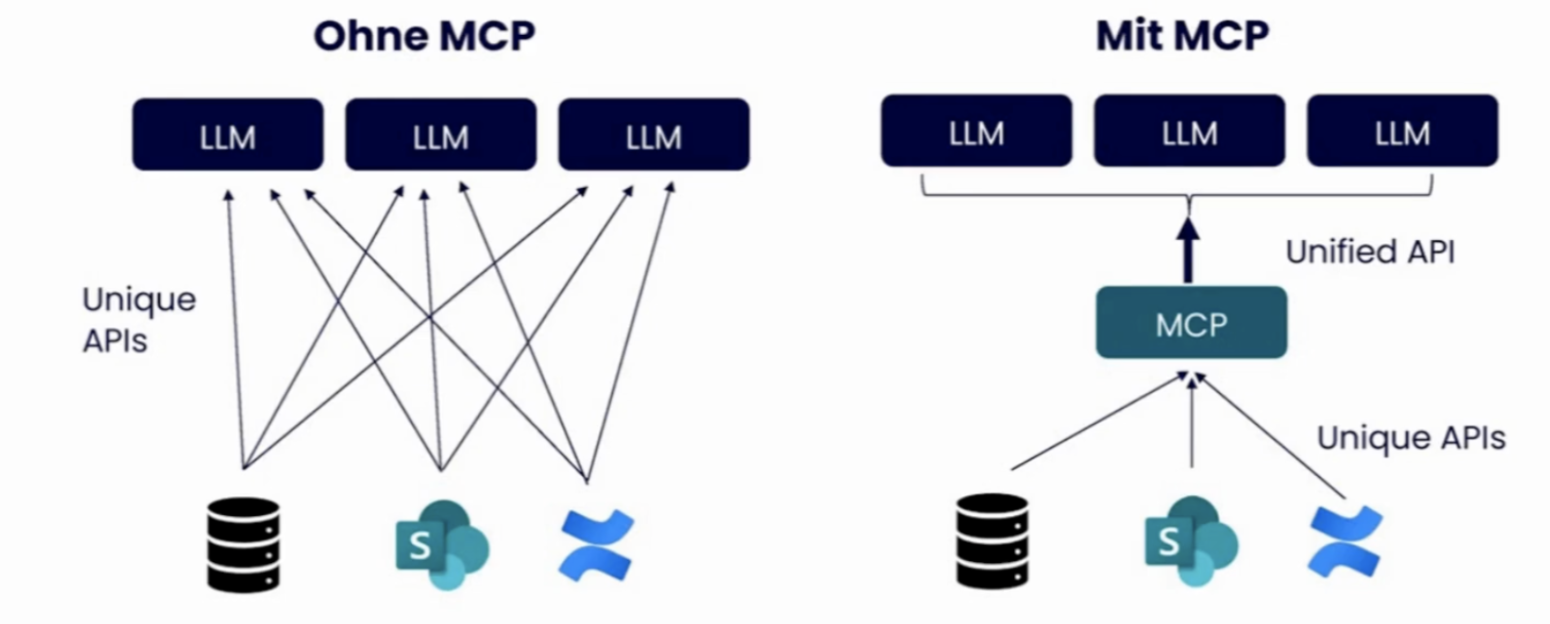
The AI maturity level of marketing and sales teams increases in particular when AI tools are deeply integrated into the existing data and system landscape. However, this is precisely where challenges still exist: With the Model Context Protocol (MCP), a common standard is currently being established through which AI models can access external systems and data sources. Many software providers are still at an early stage when it comes to implementing the corresponding interfaces, which often makes consistent and scalable AI workflows more difficult. But here, too, the following applies: those who rely on a central AI platform at an early stage ensure the sustainability of their AI investments and enable company-wide scaling.
AI security: data control
If you want to make widespread use of AI with your company’s own data, you need clear security and governance structures. This involves both secure access to documents and the question of where and how data is processed, for example in European data centers, within isolated company environments or without use for external model training.
Marketing and sales teams in particular work with sensitive information such as customer data, offers and sales documents on a daily basis. AI systems must therefore adopt existing authorization concepts and ensure that employees can only access approved content.
Transparency is crucial for increasing AI automation: companies must be able to understand which data flows into AI-supported processes, which systems are connected and where human approval remains necessary. Only if AI remains secure, traceable and controllable can it be integrated into company processes in a productive and scalable manner.

This might also interest you
Checklist: AI Maturity Levels
Get a structured overview of the different AI maturity levels in companies and learn which steps are essential for successfully continuing the journey toward becoming an AI-first company.
Download now
60 AI Use Cases at a Glance
Discover the many ways AI can be used across the entire value chain — from marketing and sales to HR, customer service, operations, and knowledge management.
Download now
Practical Insights: Success Stories
Learn from our customers how they use our AI solutions to make their companies more efficient and unlock new potential for growth, innovation, and collaboration.
Learn more